Factors Influencing Pumping Frequency
Several factors determine how often you should pump your septic tank:
- Tank Size
- Larger tanks can hold more wastewater and solids, thus requiring less frequent pumping compared to smaller tanks.
- Household Size
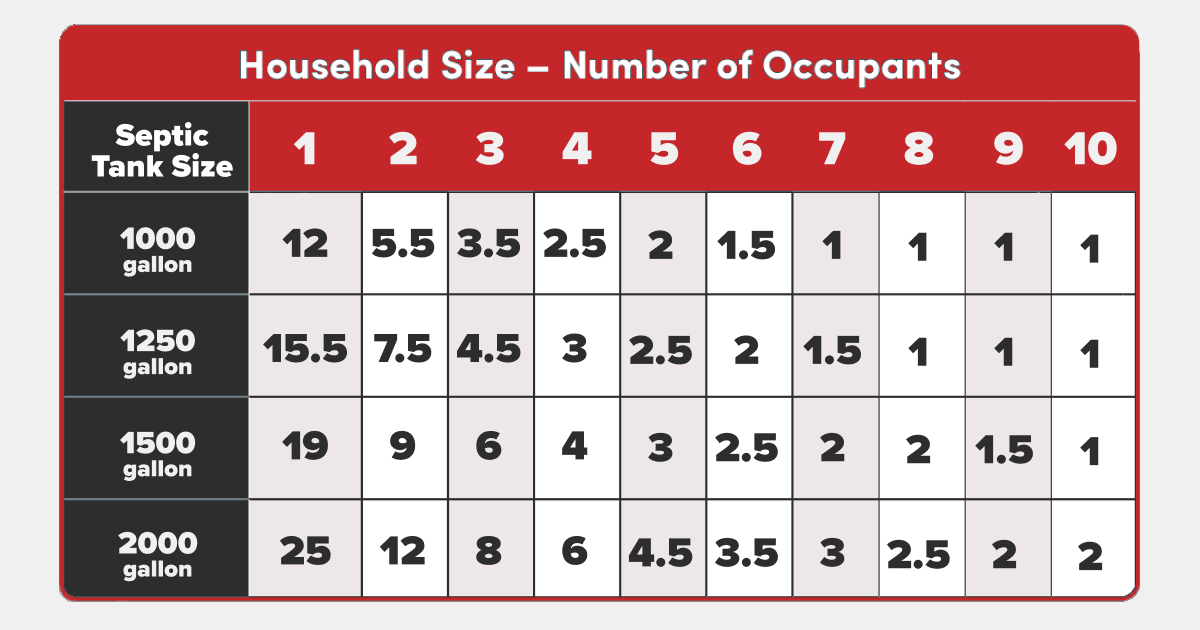
- The number of occupants in your home directly affects the volume of wastewater generated. More occupants mean more wastewater, potentially requiring more frequent pumping.
- Water Usage
- Excessive water usage, such as frequent laundry, long showers, or running multiple appliances simultaneously, can overload the septic system and necessitate more frequent pumping.
- Solid Accumulation
- The amount of solid waste accumulating in the tank affects pumping frequency. If solids build up too much, they can clog the system and lead to backups or septic system failure.
General Guidelines for Septic Pumping Intervals
While individual circumstances vary, here are some general guidelines for septic tank pumping frequency:
- Every 3 to 5 Years
- For an average-sized household (2 to 4 occupants) with a standard 1,000-gallon septic tank, pumping every 3 to 5 years is typically recommended. This timeframe allows for the removal of accumulated solids before they can cause issues.
- More Frequent Pumping
- If your household has more occupants or if you notice signs of septic system overload, such as slow drains, foul odors, or sewage backups, consider pumping your tank more frequently. Consult a professional for personalized advice.
- Less Frequent Pumping
- Conversely, if you have a smaller household or practice water conservation measures, you may be able to extend the time between pumpings. However, it’s crucial not to exceed recommended intervals to avoid system problems.
Signs That Your Septic Tank Needs Pumping
Even if you’re unsure about the last time your septic tank was pumped, certain signs indicate it may be time for maintenance:
- Foul Odors
- Unpleasant smells around the septic tank or drains could indicate a full or malfunctioning system.
- Slow Drains
- If sinks, showers, or toilets are draining slowly, it could signify a buildup of solids in the tank or clogged pipes.
- Pooling Water
- Puddles of water or overly lush grass near the drain field may indicate a septic system backup, requiring immediate attention.
- Sewage Backup
- The most obvious sign of a full septic tank is sewage backing up into drains or toilets. This situation requires immediate professional assistance to avoid health hazards and property damage.
Think Your Septic Tank Might Need Pumping? Call Us!
Regular septic tank pumping is essential for maintaining a healthy and functional wastewater treatment system. By understanding the factors influencing the pumping frequency and recognizing signs of a full tank, you can ensure proper maintenance and avoid costly repairs. Consult with a licensed septic system professional for personalized recommendations based on your household’s needs.
For professional septic tank pumping and maintenance services, contact Speedy Septic today!